B2B Lead Generation in 2026: 5 Tactics Actually Working Right Now
Cold email is dying. Social ads are expensive. Here are the 5 B2B lead generation channels producing real, qualified pipeline right now.
Shaik Saif
Founder & Lead Frontend Architect

TL;DR
Most B2B lead gen advice is recycled from 2019 — the channels have fundamentally shifted.
The highest-ROI move in 2026 is rebuilding your website as a conversion machine before spending on ads.
AI-personalized outreach can hit 15–25% reply rates when it references real prospect signals.
LinkedIn "expert POV" content compounds over 90 days — consistency beats virality.
Partnership co-selling delivers 10x the close rate of cold outbound.
Programmatic SEO pages targeting long-tail queries increasingly appear as AI search citations.
Let me be direct: most B2B lead generation advice you'll find online is recycled content from 2022. The channels that worked then are oversaturated now, and the buyers they're targeting have become immune to generic outreach. In our work with 40+ B2B companies across the US, UK, and Dubai, we've seen which five strategies are actually producing consistent, qualified pipeline right now — in early 2026.
1. AI-Assisted Hyper-Personalized Outbound
AI-personalized outreach is the practice of using artificial intelligence tools to research prospect-specific signals — recent funding rounds, job postings, a specific problem visible on their website, a comment made on a podcast — and then writing genuinely human emails that reference those signals.
Generic cold email has a sub-1% positive reply rate. In our own outbound programs, emails that demonstrate specific knowledge of a prospect's business situation consistently reach 15–25% positive reply rates. The key distinction: AI researches the signal. A human writes the email. Fully AI-generated email is increasingly flagged as spam — the winning formula is AI for research, human judgment for the message.
Tools that work: Clay.com for signal aggregation, Apollo for contact data, ChatGPT or Claude for signal summaries — then write each email yourself using those summaries.
2. LinkedIn "Expert POV" Content Strategy
The LinkedIn algorithm in 2026 rewards what we call "polarizing perspective" posts — content that takes a clear, defensible stance that some people will push back on. This is different from thought leadership fluff. It looks like: "Why your CRO agency is making you lose money" or "Cold email is not dead — you just don't know how to write it."
Post 3x per week taking a specific, opinionated stance on an industry challenge your ICP faces. Attach a simple lead magnet (PDF checklist, calculator, template) in the first comment. Engage with every comment in the first 60 minutes to signal the algorithm. Repeat consistently for 90 days. Most people quit at week 3 — the compounding effect kicks in at week 8–12.
3. Your Website as a 24/7 Demand Generation Machine
Demand generation through your website means engineering your existing web presence to convert significantly more of the traffic you already have — before spending another dollar on paid acquisition. The average B2B company spends $10,000/month generating traffic and less than $500/month converting it. Fixing that imbalance is the single highest-ROI investment most B2B companies can make.
The four-step website audit we run for every client: (1) Install Microsoft Clarity (free) and review 100 session recordings to find where visitors drop off. (2) Rewrite the hero section using the formula: [Specific outcome] for [Specific ICP]. (3) Add one named testimonial with a specific number directly below the hero CTA. (4) Reduce your primary form to 2 fields — email and company name only.
In a recent engagement, a logistics SaaS client went from 3 qualified leads/month to 21 qualified leads/month — with zero change in traffic — by addressing those four issues. See our full B2B website redesign case study for the detailed breakdown.
4. Programmatic SEO for AI-Cited Authority
Programmatic SEO is the practice of building 50–200 highly specific, search-intent-aligned pages targeting long-tail B2B queries that your ideal clients are actively searching for. Examples: "CRM software for commercial real estate brokers," "ERP system for manufacturing companies under 100 employees," "HIPAA-compliant telehealth platform for solo practitioners."
These pages serve two simultaneous functions in 2026: they rank in Google for low-competition, high-intent searches, and they appear as citations in AI search engines — ChatGPT, Perplexity, Google AI Overviews — when B2B buyers ask industry-specific questions. According to Ahrefs' content research, long-tail keywords under 1,000 monthly searches account for 70%+ of all B2B organic traffic conversions. These are the terms signalling purchase intent — and most competitors are not targeting them.
5. Partnership and Co-Selling GTM Motions
Co-selling is a go-to-market strategy where two non-competing vendors serving the same ICP jointly sell into each other's networks through referral agreements, co-authored content, and joint events. A warm referral from a trusted vendor has a 10x close rate compared to cold outbound — and costs a fraction of the CAC from paid channels.
How to build your first partnership program: (1) Map your top 10 clients — what other B2B tools do they use that you don't compete with? (2) Reach out to 3–5 of those vendors with a specific, mutual referral proposal. (3) Run a co-hosted LinkedIn Live or webinar together — shared audience, shared credibility. (4) Set up a formal referral agreement: 10–15% of closed revenue for the first year is standard for B2B SaaS.
Ready to Turn Your Website into Your #1 Lead Generator?
Most B2B websites are traffic graveyards — decent visitors, terrible conversion. We audit B2B websites and identify the exact 3–5 changes that will double qualified leads from existing traffic. No retainer required. Just a clear, prioritised action plan.
Frequently Asked Questions
Frequently Asked Questions
What is the best B2B lead generation channel in 2026?
The highest-ROI B2B approach in 2026 is a three-channel stack: (1) a high-converting website that captures organic and paid traffic efficiently, (2) LinkedIn thought leadership content that builds inbound authority over time, and (3) a structured partner referral program with 3–5 non-competing vendors serving the same ICP. Cold outbound works but requires significant personalization investment.
How many leads does a B2B company need per month to hit revenue targets?
Work backward from your close rate and deal cycle. Formula: Monthly lead target = (Monthly new client goal × 100) ÷ close rate %. If you want 5 new clients/month and close at 25%, you need 20 qualified SQLs/month arriving consistently — not intermittently.
Does SEO still work for B2B lead generation in 2026?
Yes — and more than ever. Well-optimised, authoritative B2B content increasingly gets cited by AI search engines (ChatGPT, Perplexity, Google AI Overviews) when professionals ask industry-specific questions. A single cited article can drive continuous discovery at a scale that paid ads cannot match.
Is cold email dead for B2B outreach?
Generic batch-and-blast cold email is effectively dead (sub-1% reply rate, high spam rates). AI-personalized cold email that references specific prospect signals and is sent in small, manually reviewed batches consistently achieves 15–25% positive reply rates. The difference is specificity — buyers respond when they believe you understand their specific situation.
How much should a B2B company spend on lead generation?
B2B companies should allocate 5–10% of revenue to marketing, with 40–50% of that budget dedicated to lead generation activities. However, most early-stage B2B companies should invert this and invest first in conversion rate optimisation of their existing website before increasing traffic spend.
What is the fastest way to generate B2B leads right now?
Three zero-cost actions: (1) Ask your best 5 clients for one warm referral each — this week, not next month. (2) Rewrite your website hero section with the formula: [Specific outcome] for [Specific ICP]. (3) Post one high-conviction LinkedIn insight about a problem your ICP faces. These three actions can generate qualified pipeline within 7–14 days.
Written by
Shaik Saif
Founder & Lead Frontend Architect
Shaik Saif is a full-stack product engineer and founder with 8+ years of experience building high-converting SaaS marketing websites and scalable MVPs for founders across the US, UK, and Dubai. He has shipped 40+ products and written extensively on conversion-first development.
Keep Reading
Related Articles
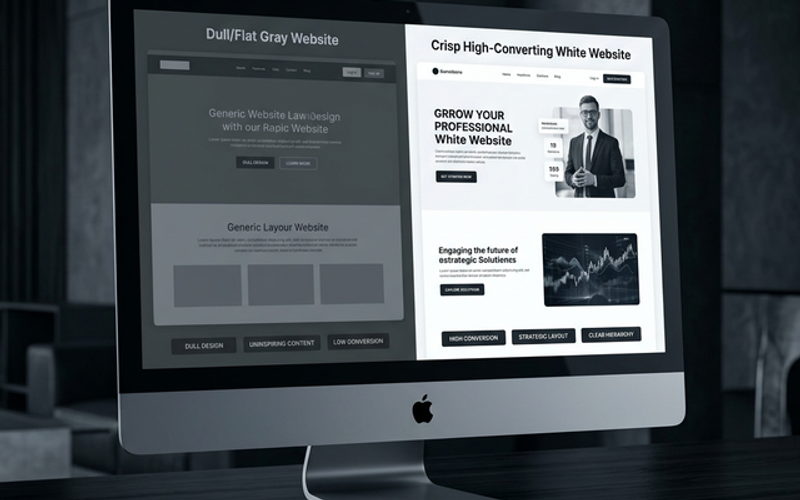
The B2B Website CRO Playbook: Turn 2026 Traffic Into Pipeline
You do not need more traffic — you need vastly better conversion. This is the exact 2026 CRO playbook we run for B2B client websites to double qualified leads without increasing ad spend.
Webflow CMS vs WordPress: A Practical Comparison for Agencies
Agencies choosing between Webflow CMS and WordPress for client sites face different trade-offs than individual businesses. Here's the agency-specific breakdown.
WordPress to Webflow Migration: The Complete 2026 Guide
Everything you need to migrate from WordPress to Webflow without losing a single Google ranking — process, costs, timeline, and pitfalls.