The B2B Website CRO Playbook: Turn 2026 Traffic Into Pipeline
You do not need more traffic — you need vastly better conversion. This is the exact 2026 CRO playbook we run for B2B client websites to double qualified leads without increasing ad spend.
Shaik Saif
Founder & Lead Frontend Architect
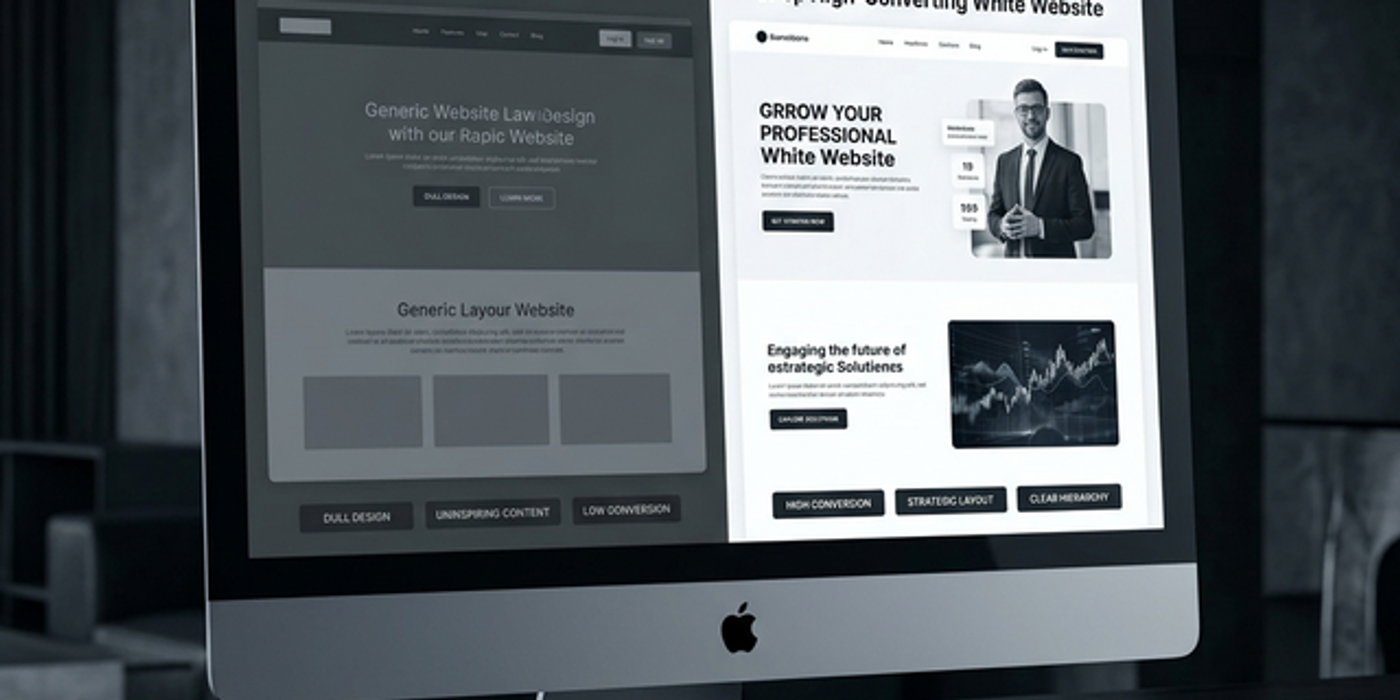
TL;DR
- The average B2B company deeply over-invests in traffic and under-invests in Conversion Rate Optimization (CRO).
- Hero Section Clarity: Stop using clever marketing fluff. Use the formula: [Result] for [ICP].
- Social Proof Placement: Move specific, metric-driven testimonials directly under the primary CTA.
- Risk Reversals: Guarantee an outcome or offer a "no credit card" trial to mathematically reduce friction.
- Tracking session recordings (Clarity) and mapping scroll depth are non-negotiable for 2026 diagnostics.
The average B2B company spends roughly $10,000/month on traffic generation (SEO, paid search, LinkedIn ads, content syndication) and critically less than $500/month on making that expensive traffic actually convert. The math fundamentally does not work. Here is how we flip the equation using data-driven Conversion Rate Optimization (CRO).
As we move deep into 2026, buyer intent is higher but patience is lower. A 1% conversion rate for enterprise SaaS is mathematically unsustainable if your CAC on paid channels exceeds your 12-month LTV.
The Highest-Impact CRO Changes You Can Make Today
1. Fix the Hero Section Instantly. If your first fold doesn't communicate exactly who you help and what result you produce within 3 seconds, everything else on the page is irrelevant. Use the unbreakable formula: [Highly Specific Result] for [Ideal Customer Segment]. Drop the jargon like "synergistic ecosystem."
2. Relocate Specific Social Proof. "Trusted by 500+ companies" is completely meaningless to a cynical 2026 buyer. Add one specific testimonial showcasing a real name, a real company, and the specific percentage or dollar number they achieved. Place this directly beneath the hero CTA button.
3. Ruthlessly Prune Form Fields. Every single additional form field reduces your aggregate conversion rate by roughly 11%. Ask for work email and company name only. You should aggressively qualify the lead on the second-touch (via a specialized calendly routing form or enrichment API) — not the first touch.
4. Implement Honest Comparison Tables. Show your Ideal Customer Profile (ICP) exactly why you're structurally better than the legacy alternatives they are already evaluating. Cultivating fear of showing competitors is an outdated 2018 mindset; addressing them directly signals supreme market confidence.
5. Deploy Aggressive Risk-Reversals. Insert a risk-reversal sub-headline near absolutely every CTA on the site. Phrase like "No credit card required," "Cancel anytime via dashboard," or "30-day ROI guarantee." These micro-assurances actively defuse the final physiological friction points that cause page abandonment.
The CRO Diagnostic Framework
You cannot fix what you do not measure. For 2026, you must track these four metrics weekly on a dedicated dashboard: (1) Blended landing page conversion rate (segmenting organic vs paid), (2) Form abandonment rate, (3) Time on qualified page by traffic source, and (4) Scroll depth drop-off points.
Install Microsoft Clarity (it is free and highly compliant) and allocate one hour every Friday to watch 20 session recordings of users who bounced at the pricing page. The insights there will dictate your next A/B test.
Frequently Asked Questions
Frequently Asked Questions
What is considered a "good" conversion rate for a B2B SaaS website?
In 2026, B2B website benchmarks vary greatly by channel: Organic search intent traffic should convert at 3-5%. High-intent Paid search (Google Ads) should hit 4-8%. Direct traffic sits at 5-10%. If your primary funnel is converting below 1.5%, you officially have a catastrophic conversion problem, not a traffic problem.
How long does a proper CRO sprint take to show statistically significant results?
High-impact quick wins (like hero copy rewrites and form field reduction) will show measurable mathematical results within 2-4 weeks provided you have sufficient traffic (1,000+ monthly uniques). Massive structural changes like new application architecture require 4-8 weeks to validate statistically.
What software tools are required for a B2B website CRO program?
For Heat mapping & Session Recording: Microsoft Clarity (Free) or Hotjar. For A/B Testing execution: VWO, Optimizely, or PostHog. For Analytics: GA4 paired with a robust CRM like HubSpot to track lead source directly to closed-won revenue.
Should we test button colors to improve conversion rates?
Absolutely not. Testing button colors ("green vs red") is performative CRO. In B2B, you should only test substantial variables: radically different value propositions, entirely different pricing models, or the presence versus absence of friction-heavy form fields. Small UI tweaks rarely yield statistical significance.
How does site speed actually impact B2B conversions?
Aggressively. Portent's most recent studies indicate that every 1-second delay in page load actively reduces sheer conversion rate by roughly 7%. If your Next.js or Webflow site takes 4 seconds to reach LCP (Largest Contentful Paint), you are bleeding pipeline before they even read the hero.
What is a Risk Reversal in copywriting?
A Risk Reversal is a strategic statement that mathematically shifts the burden of risk from the buyer to the seller. Phrases like "100% money-back guarantee," "Cancel your subscription with 1 click," or "We will migrate your data for free" actively destroy objection anxiety before the user clicks.
Written by
Shaik Saif
Founder & Lead Frontend Architect
Shaik Saif is a full-stack product engineer and founder with 8+ years of experience building high-converting SaaS marketing websites and scalable MVPs for founders across the US, UK, and Dubai. He has shipped 40+ products and written extensively on conversion-first development.
Keep Reading
Related Articles
Webflow CMS vs WordPress: A Practical Comparison for Agencies
Agencies choosing between Webflow CMS and WordPress for client sites face different trade-offs than individual businesses. Here's the agency-specific breakdown.
WordPress to Webflow Migration: The Complete 2026 Guide
Everything you need to migrate from WordPress to Webflow without losing a single Google ranking — process, costs, timeline, and pitfalls.

The Future of Search: Dominate Organic Rankings with Intent-First Architecture
The search world is moving from keywords to intent. Discover why intent-first architecture is the only way to dominate organic rankings.